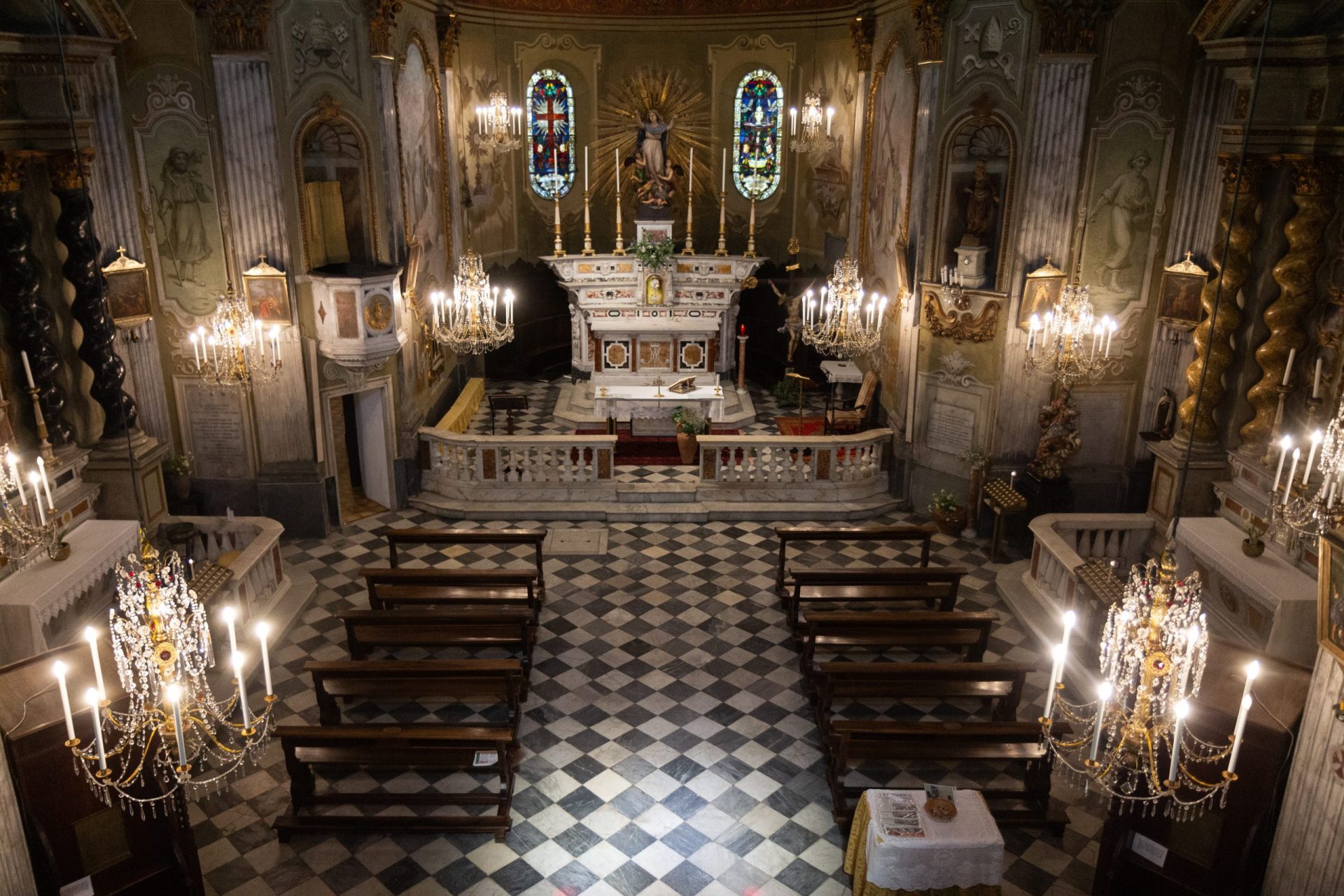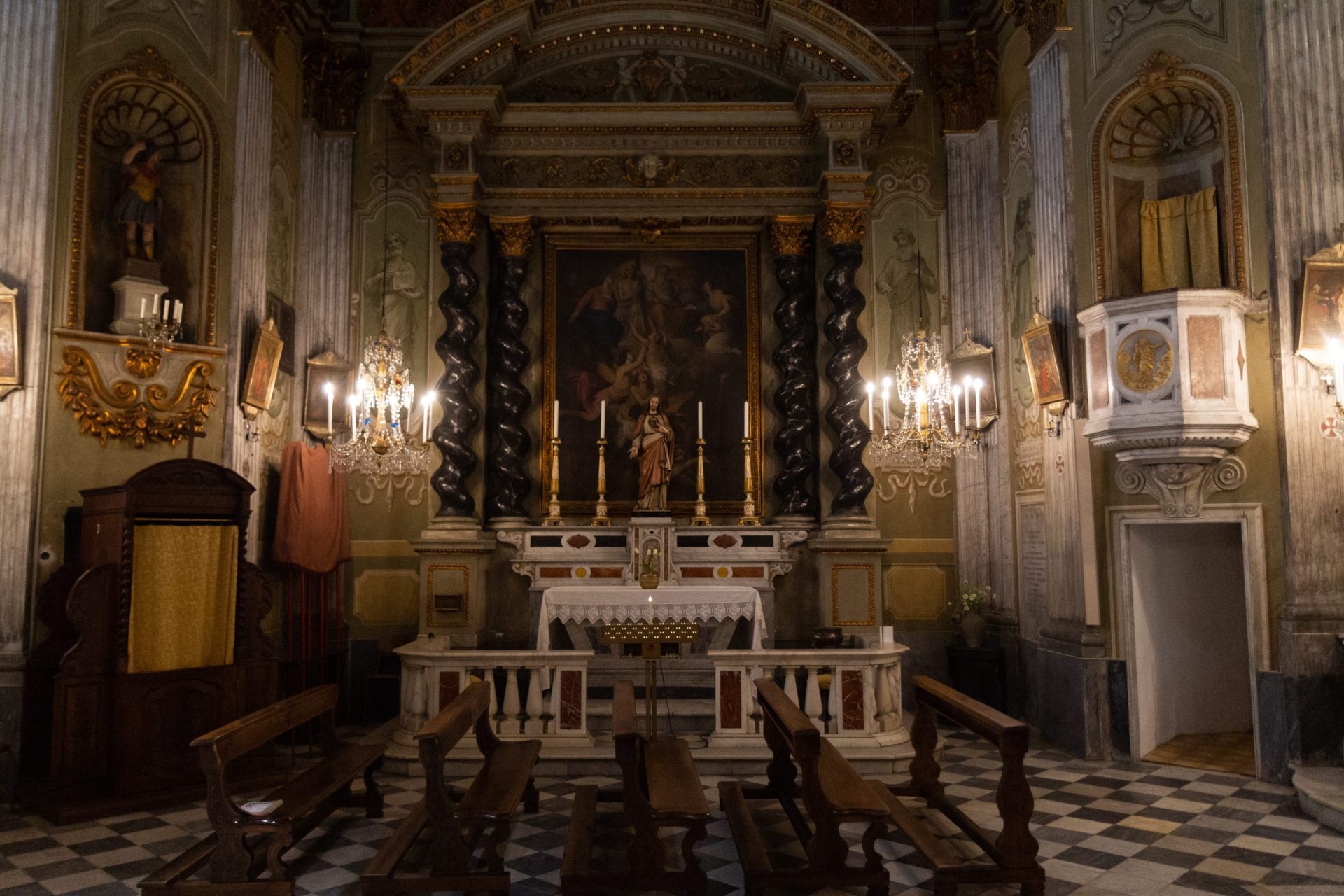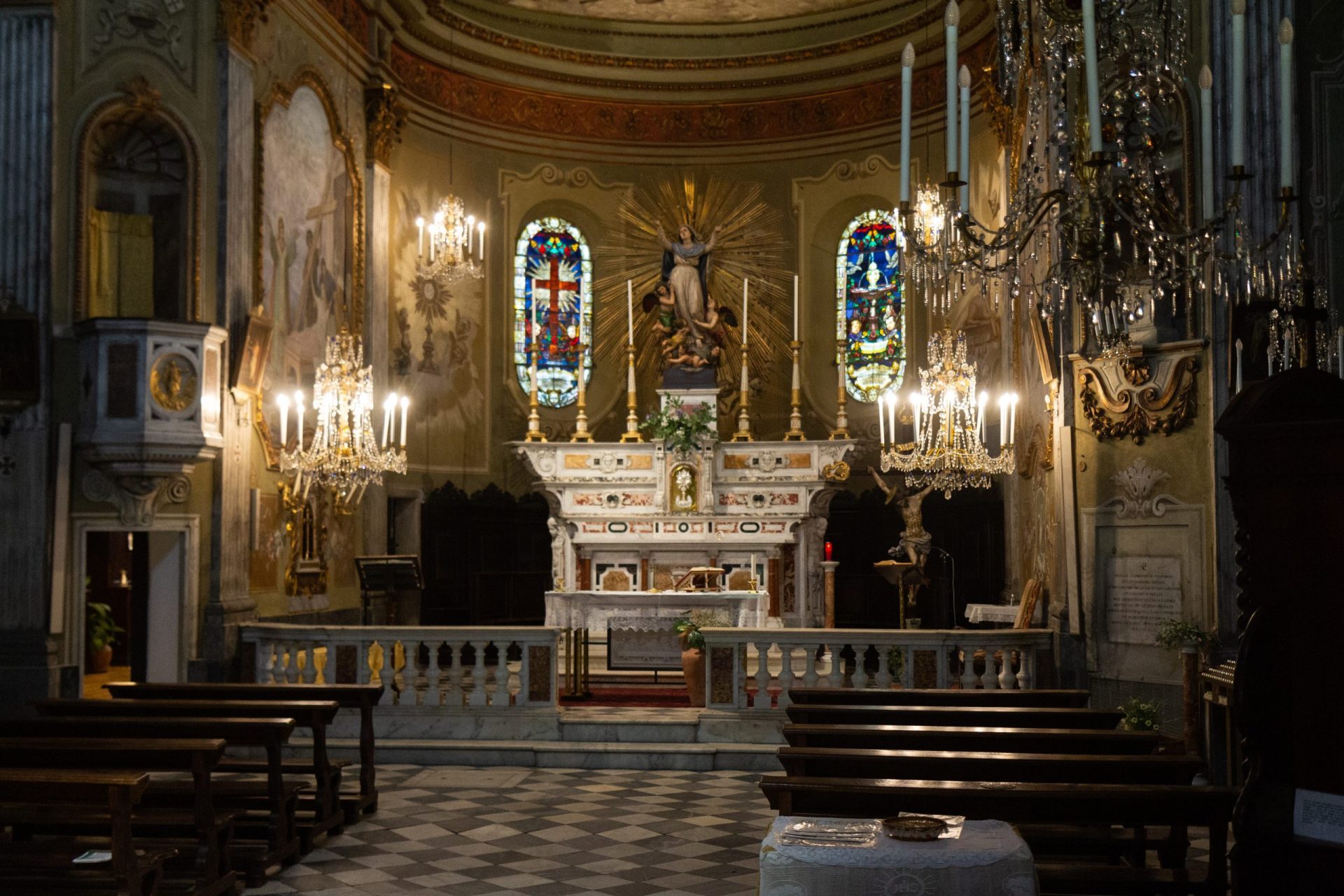
The village parish church: a blend of sacred art and centuries of devotion.
Church of Santa Maria Assunta
Faith and art from the Middle Ages to the Baroque period
The silhouette of the bell tower of the parish church of Carrosio has been a constant feature of village life for centuries. More than just a religious building, the Church of Santa Maria Assunta is a spiritual and cultural landmark that intertwines the community’s medieval roots with the Baroque elegance of its present-day appearance.
Medieval origins
The presence of a parish church in Carrosio is documented as far back as 1212, when the church was under the jurisdiction of the ancient monastery of San Marziano in Tortona. In 1248, a papal bull issued by Pope Innocent IV assigned it to the Diocese of Genoa, establishing a bond that continues to this day. From 1490, the church was established as an independent parish, thus becoming the religious heart of the community.
The Baroque reconstruction
The present building was constructed between the late 17th century and the early decades of the 18th century (1675–1729), in a ‘rural’ Baroque style: sober yet solemn, suited to the rural setting. The façade, with two orders punctuated by pilasters, frames a fresco introducing the theme of Marian glory. The single-nave architectural layout and balanced proportions convey both composure and dynamism.
Art and Devotion
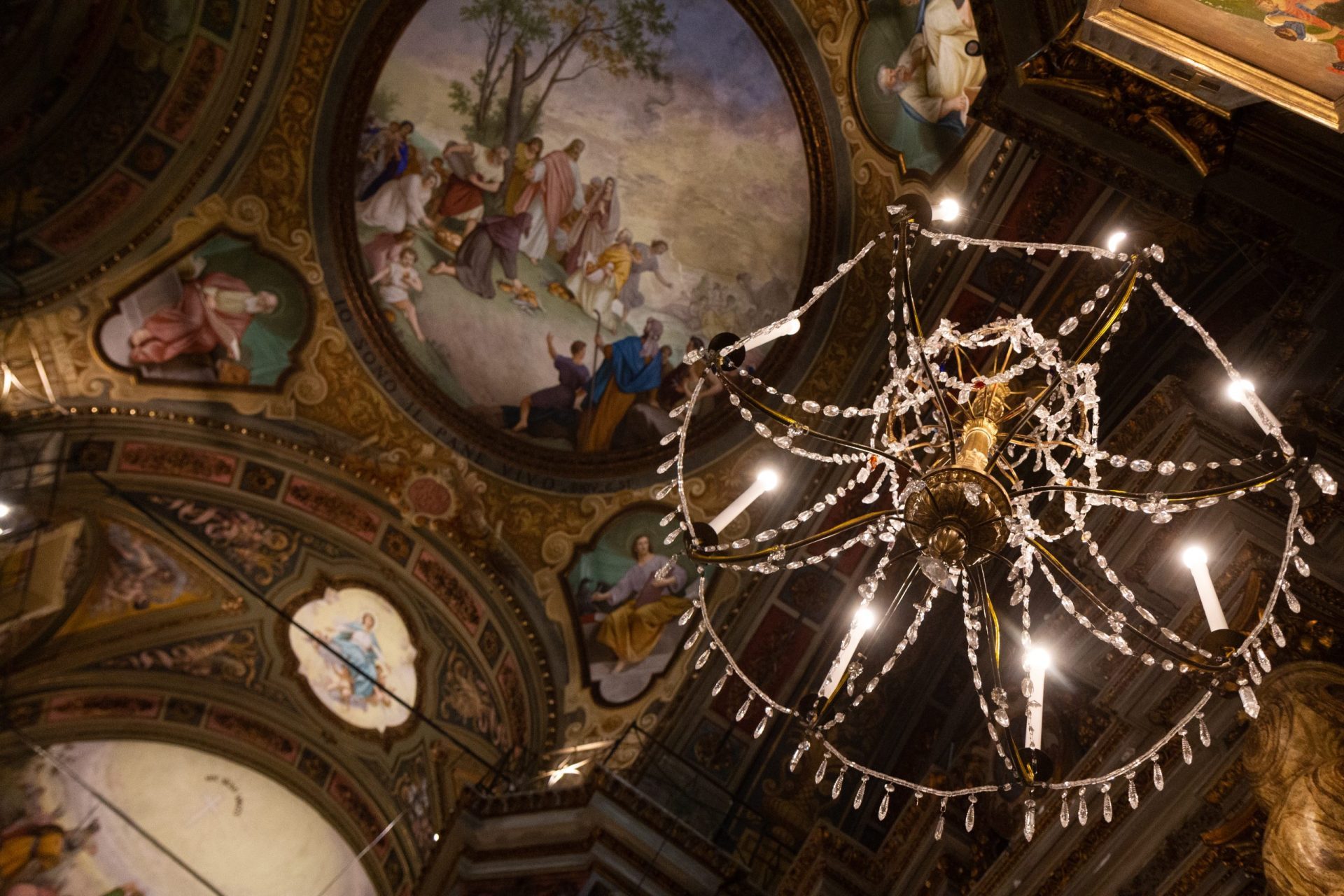
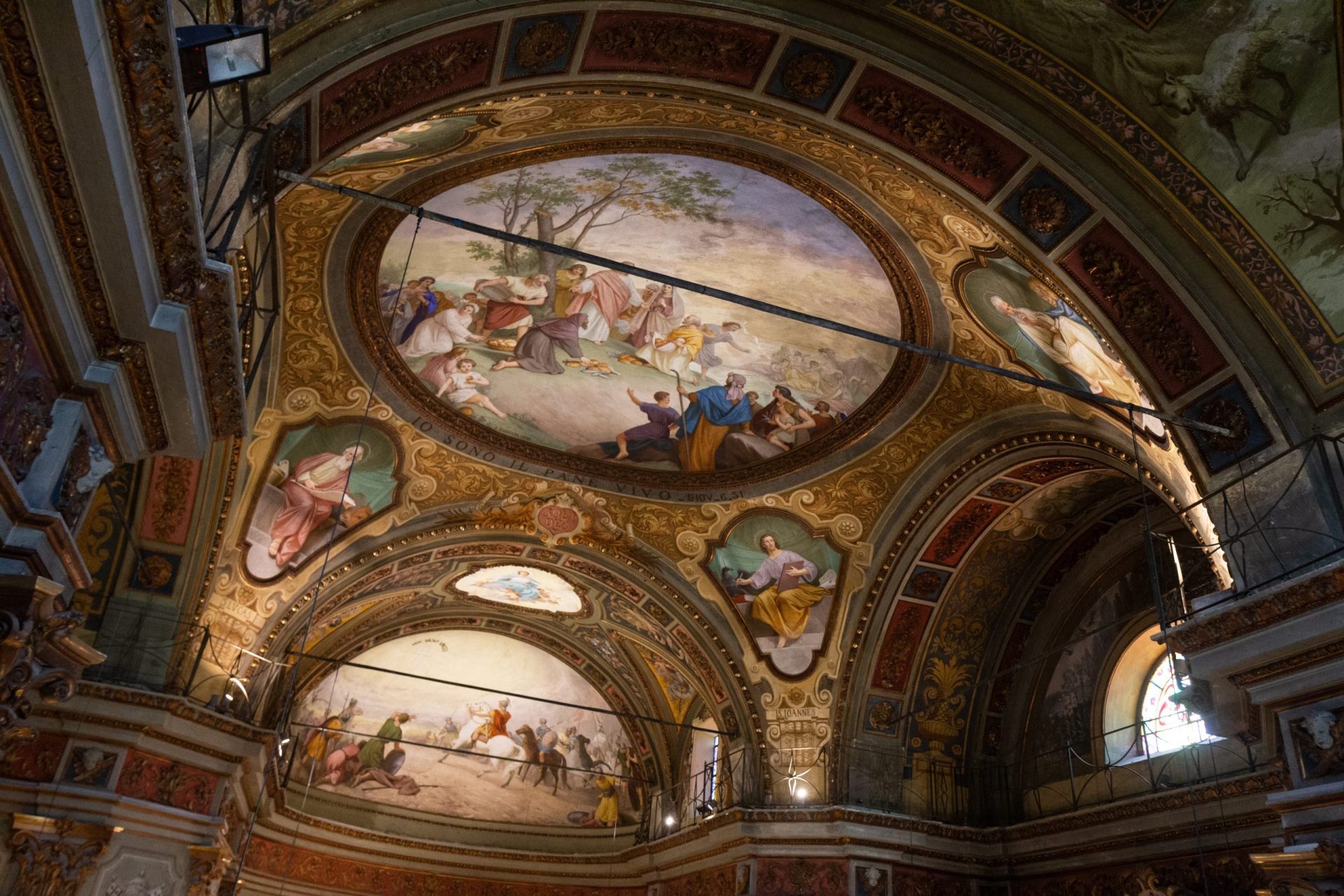
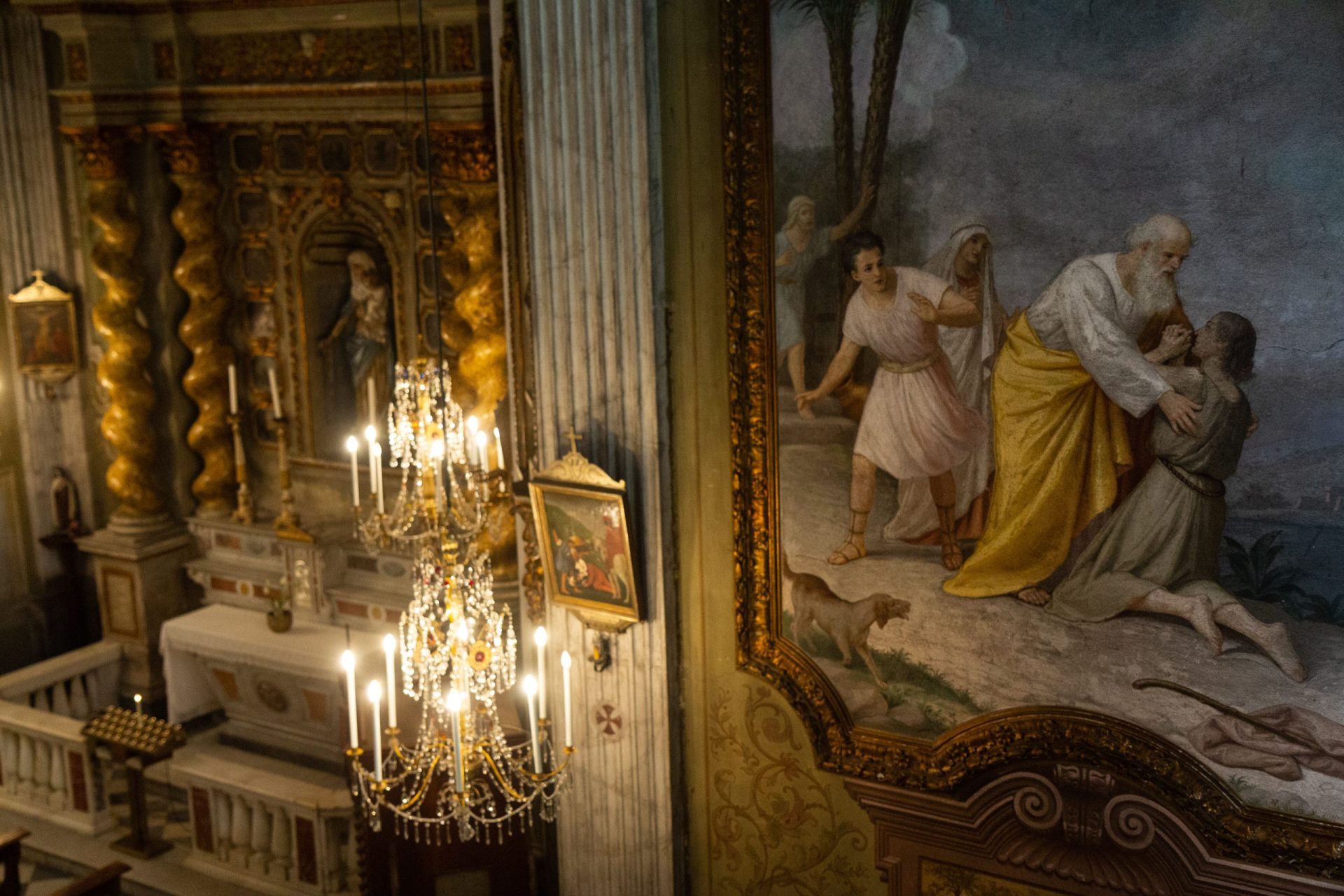
Inside, a large cycle of frescoes painted by Luigi Gainotti between 1903 and 1910 depicts Gospel episodes with narrative vigour: from the Good Samaritan to the Prodigal Son, right up to the Feeding of the Five Thousand. The artist was assisted by Achille De Lorenzi, who oversaw part of the decoration.
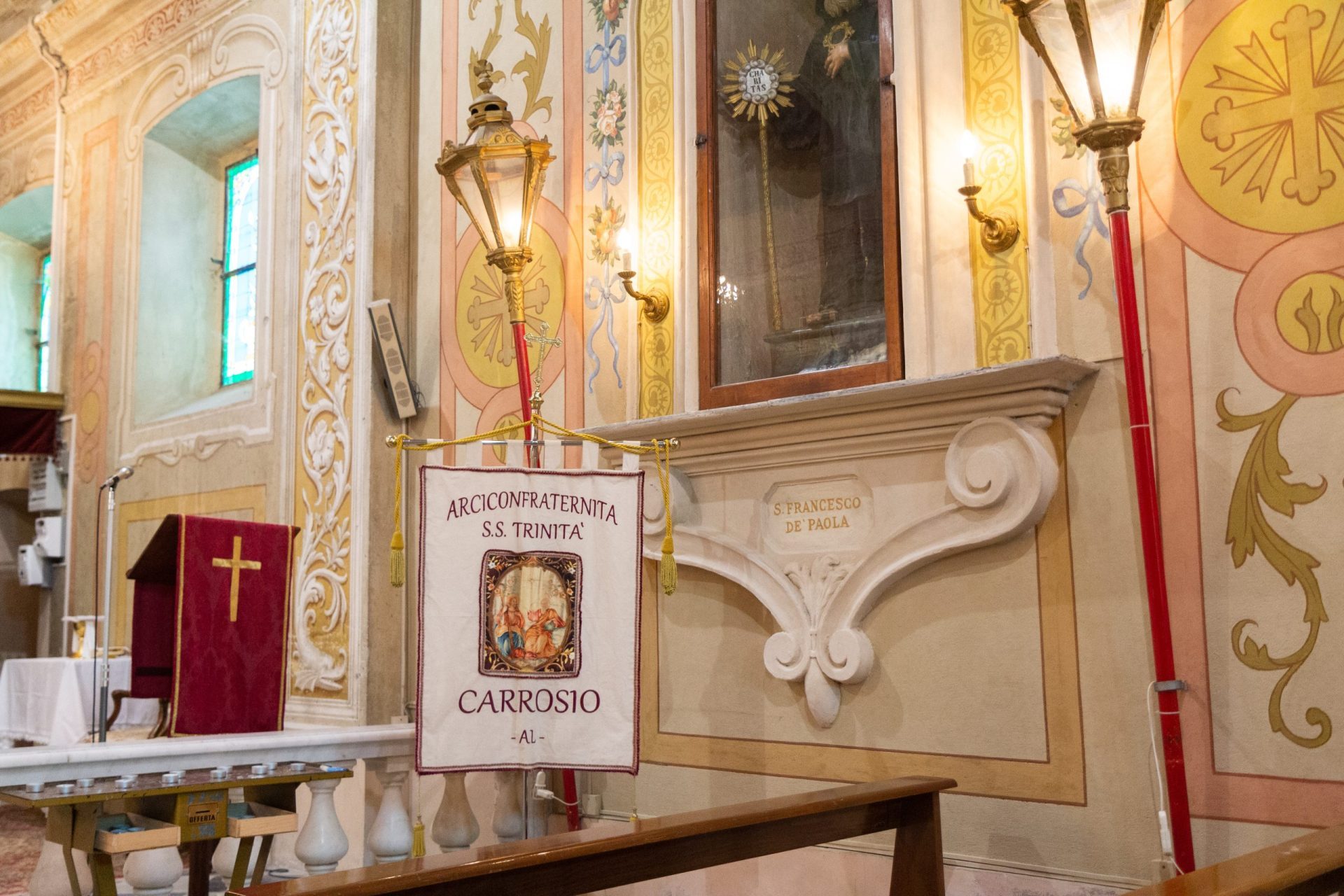
Among the furnishings, the polychrome wooden statue of the Assumption (18th century, Genoese school) and a reliquary of the Holy Cross of 17th-century Roman manufacture, signs of a deep-rooted and proudly preserved devotion. Also worth noting is the Enrico Negri organ from 1924, which still accompanies services today.
A place of identity
The parish church is not merely a sacred building: it is the living memory of the community of Carrosio. In the adjoining cemetery, gravestones and the remains of frescoes – including a large 17th-century Saint Christopher – link the veneration of the dead to the protection of the living. Every celebration, from the patronal feast of the Assumption to more intimate occasions, renews the church’s central role as a meeting place, a spiritual refuge and a symbol of identity.
A bridge between different eras
Visiting the Church of Santa Maria Assunta means traversing centuries of history: from the earliest medieval references to the Baroque period, from 20th-century restorations to life today. It is the beating heart of Carrosio, a place where stone and faith, art and community intertwine in a single narrative.
Watch the video
Gallery