Brotherhoods and popular devotions in a little gem of a village.
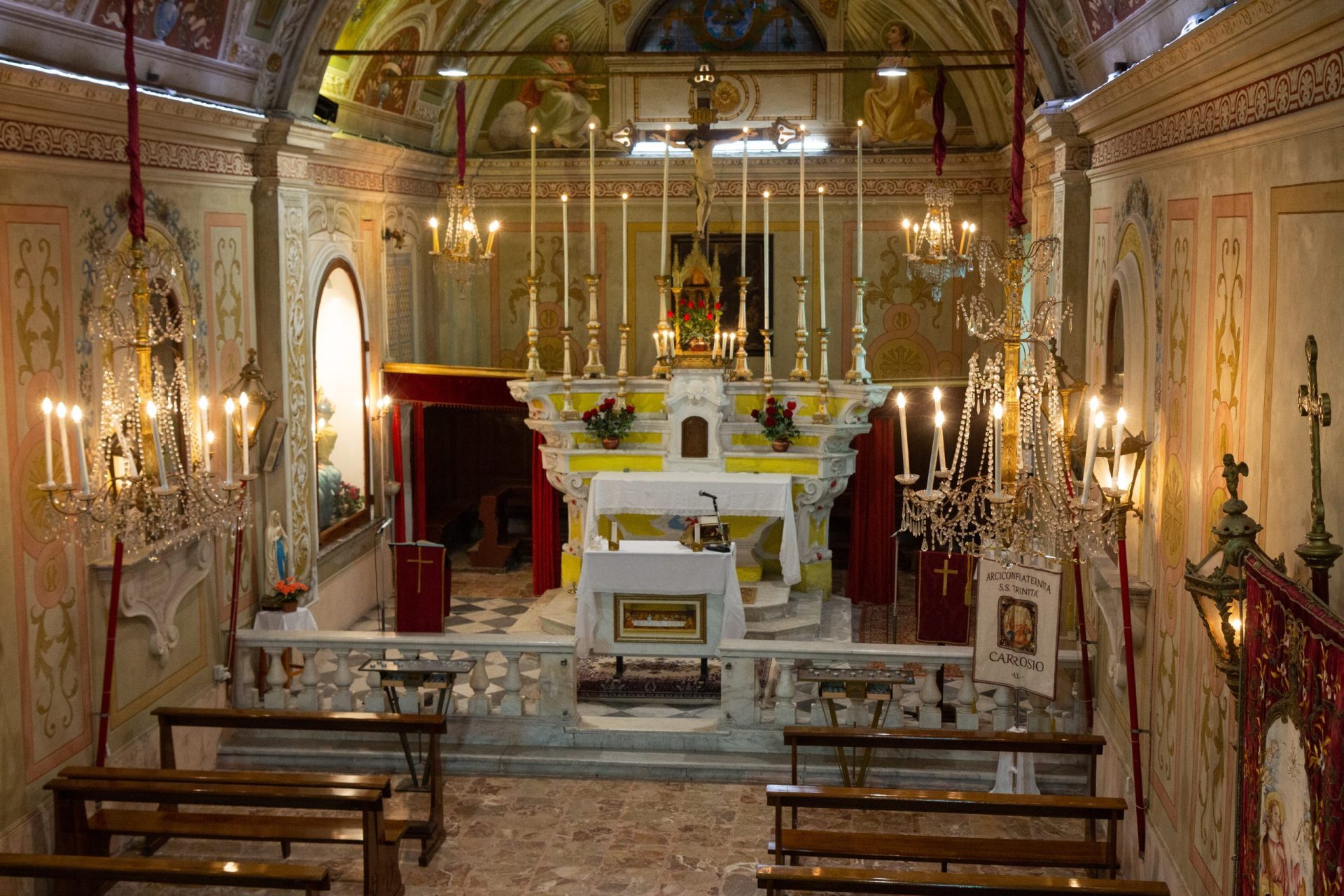
The Oratory dedicated to the Holy Trinity and seat of the Confraternity of the same name, whose members wear red cloaks and red, black or sky-blue tabards depending on the occasion, stands alongside the church on the southern side of the churchyard. The building features a double-pitched roof crowned by a gable, with the façade divided into three sections by pilasters of limited projection, between which two vertical single-lancet windows are set.
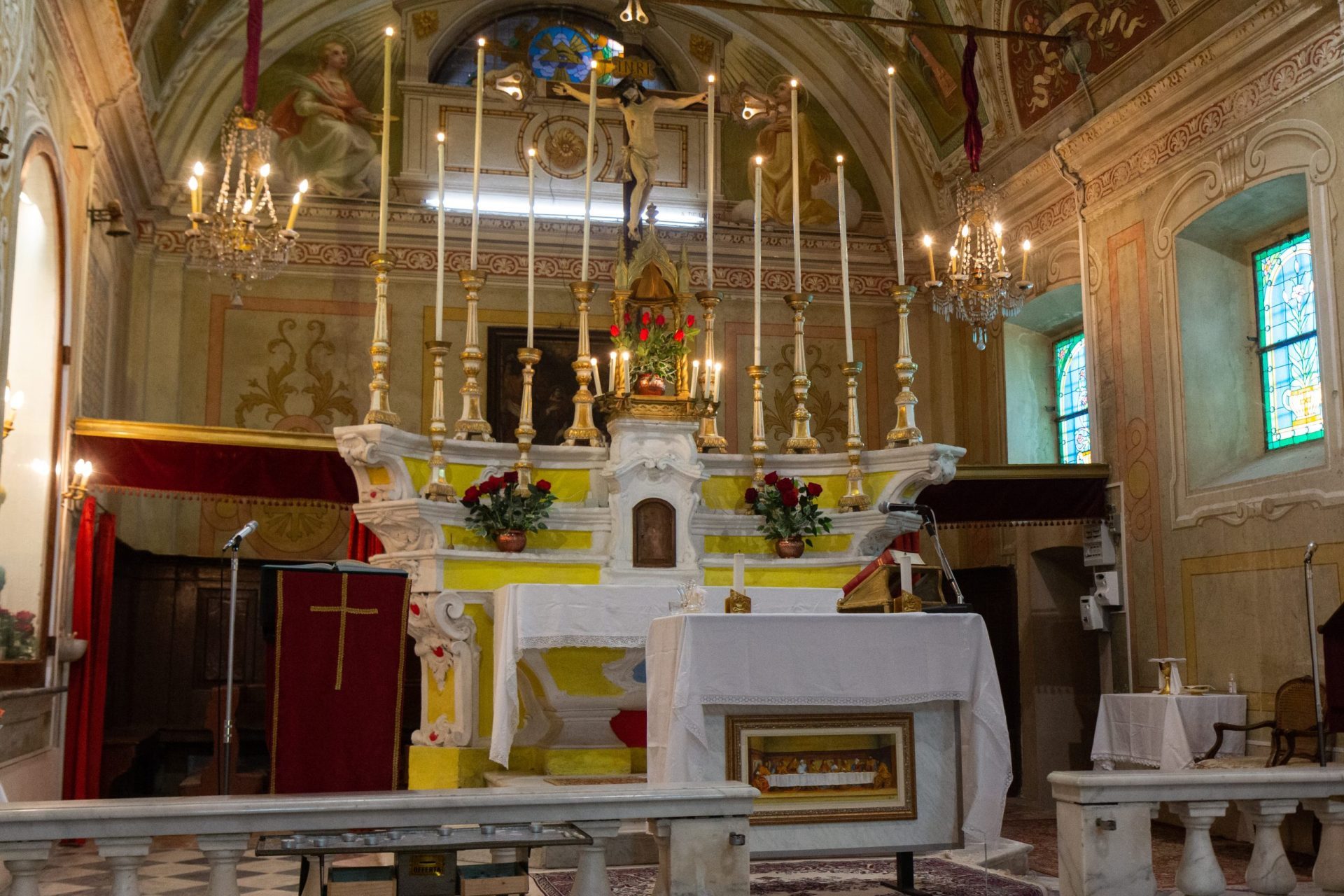
The single-lancet windows frame a very mediocre late 14th-century depiction of the Trinity, devoid of any even minimal decorative value, which is in urgent need of repainting, avoiding unnecessary restoration work. The interior, a single-nave space with a barrel vault, preserves several religious objects of some artistic merit.
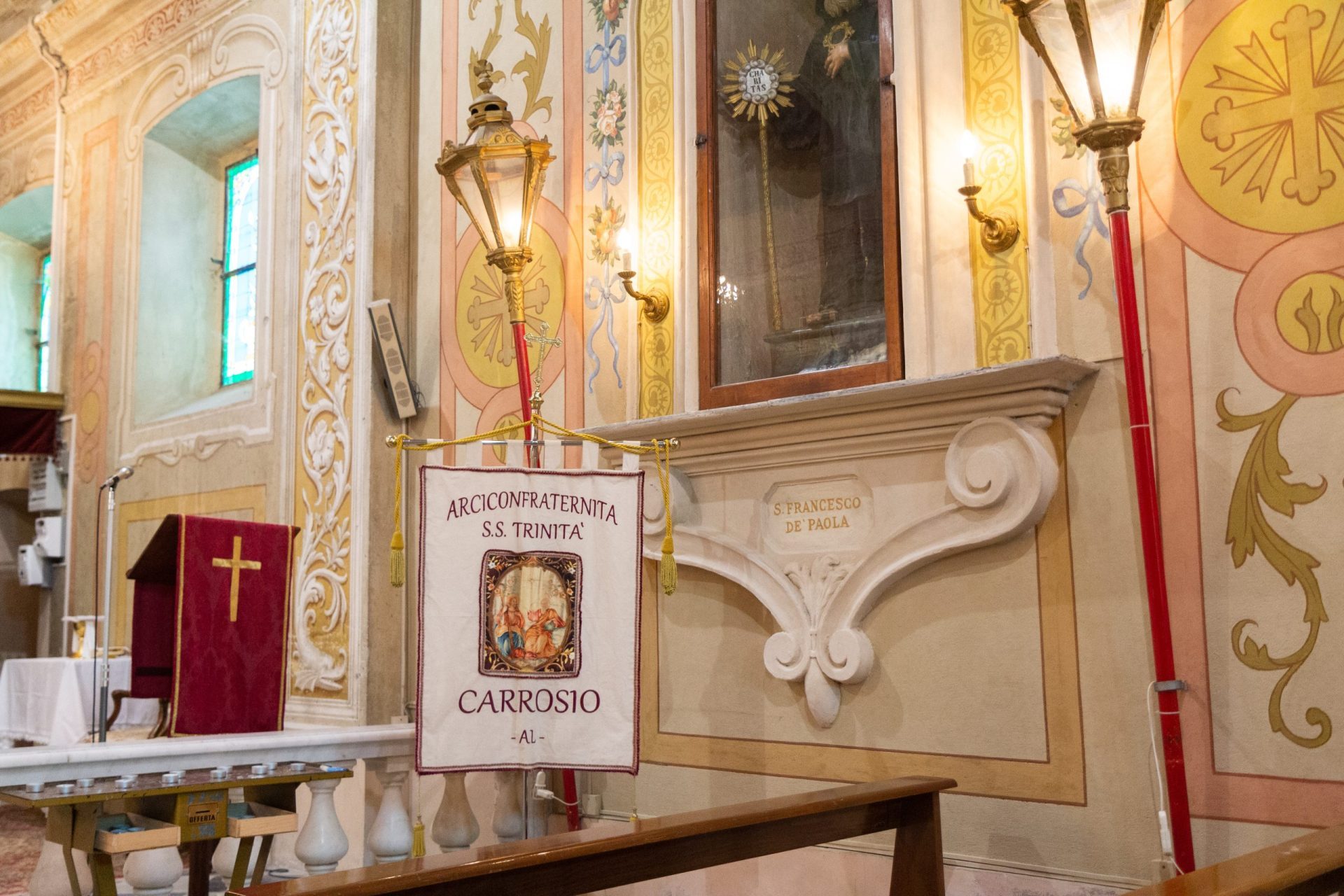
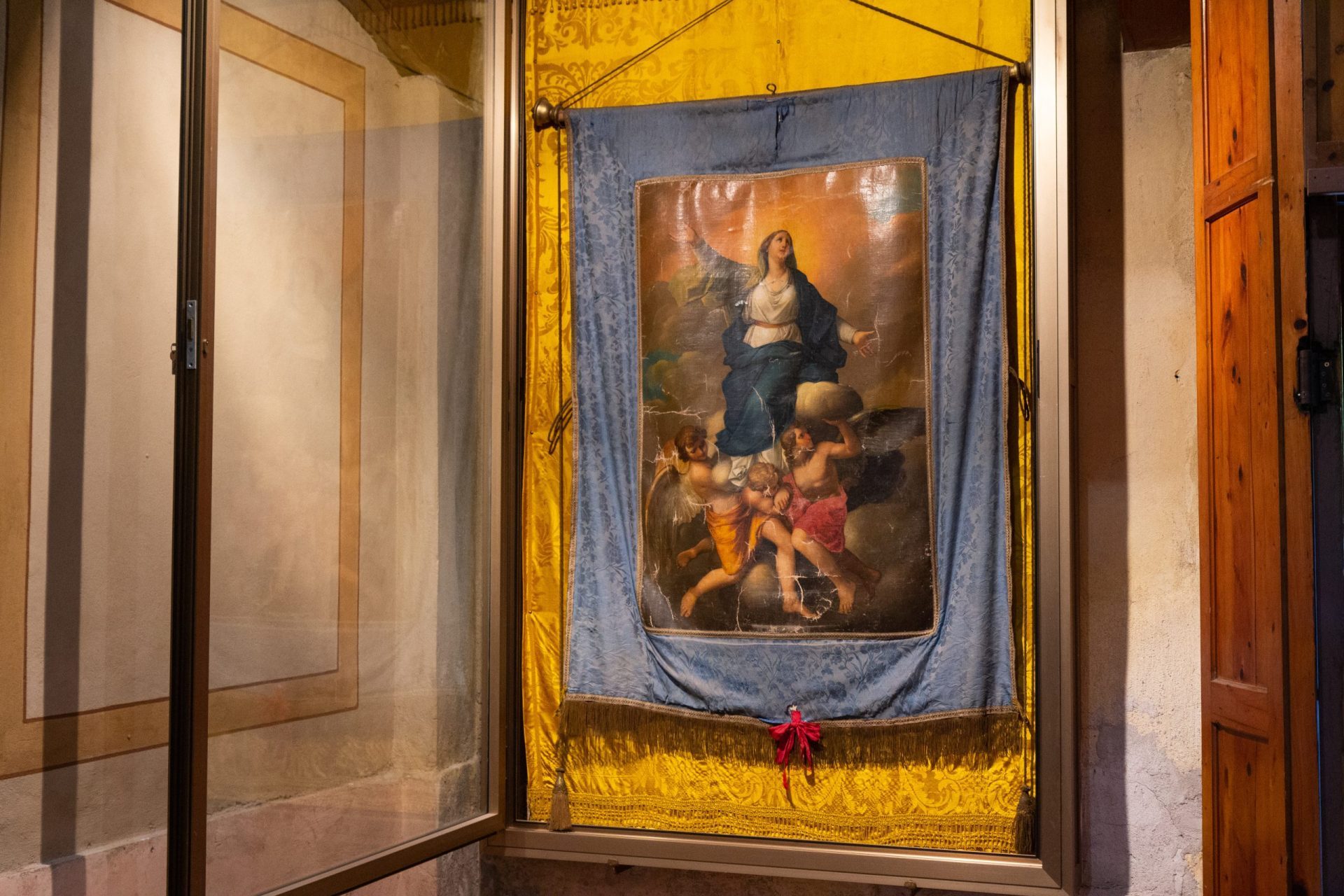
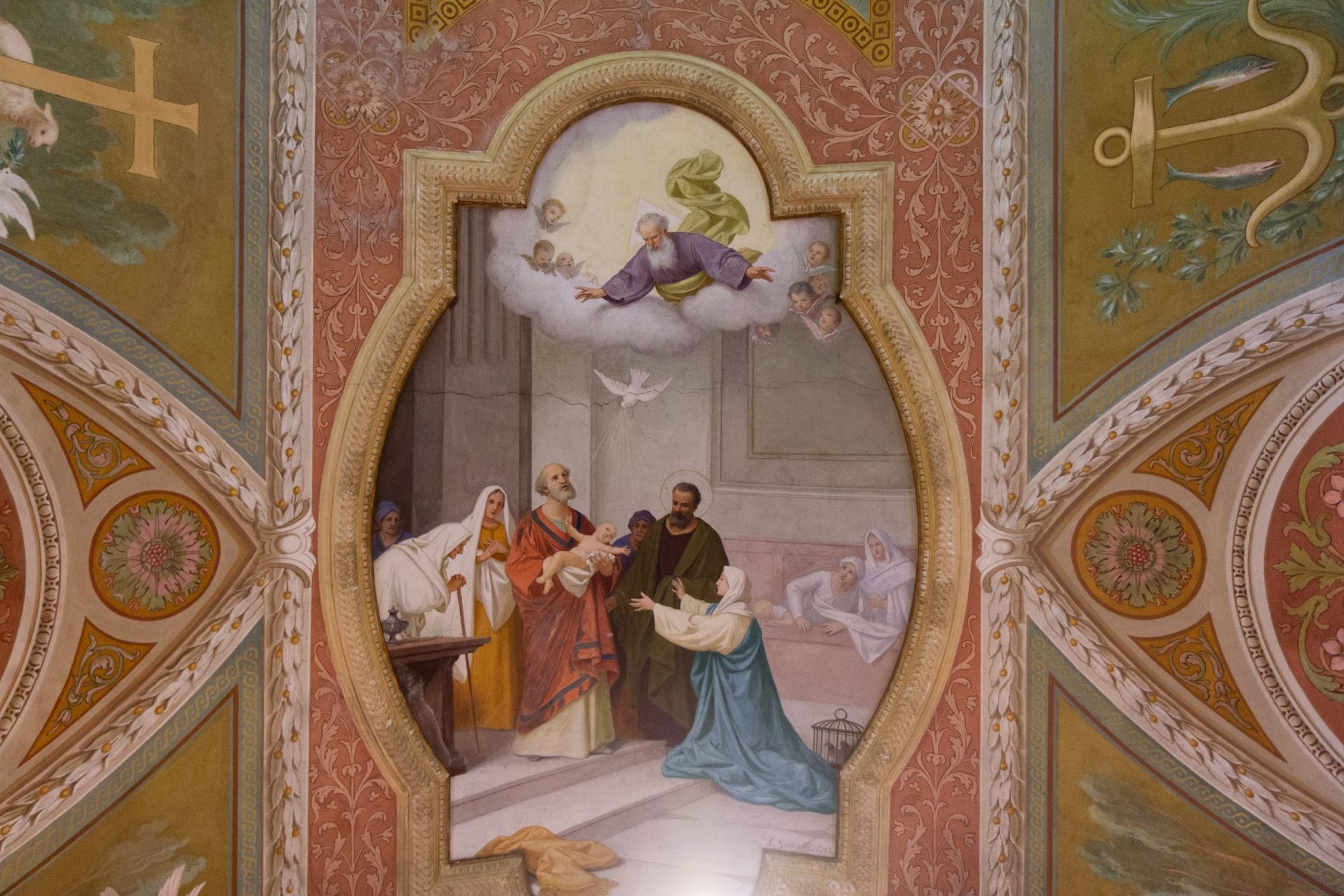
Two 18th-century processional maces decorated with silver figures of saints; the banner painted on both sides by a diligent anonymous Neoclassical Mannerist; the monolithic statue of the Trinity; the 18th-century crucifix of Genoese origin; the fresco by Luigi Gainotti depicting the Presentation of Jesus at the Temple, but, above all, the painting of the Martyrdom of Saint Stephen, situated above the central seat of the choir.&
A work which, despite its unfortunate location and precarious state of preservation, hints at significant references to the great Genoese painting of the early seventeenth century and appears to be provisionally attributable to the workshop of Domenico Fiasella. The first documented reference to the Oratory and the Confraternity dates back to 29 November 1645, when the extraordinary assembly approved the ‘Capitoli’ of the congregation. On 16 June 1648, Pope Innocent X granted privileges and indulgences to the Confraternity. A copy of the original parchment “Littterae aggregationum indulgentiarum et privile-giorum” is preserved in the institution’s archives.
Gallery